inTheEU Assist · Governed AI · On-Premise
Put AI to work.
Keep control.
Show the record.
Turn authorised documents, case context and institutional knowledge into review-ready professional work. Run on premises, govern what enters the system, require human approval where it matters, and control what may become reusable knowledge afterwards.
Scroll
Accountability built into the workflow
Know what ran.
Know who approved it.
Assist connects source material, approved context, workflow execution, agent actions and named human decisions. Defined events can be signed and hash-linked, creating a tamper-evident trail designed to support review, reconstruction and governance without pretending that technology alone guarantees compliance or legal admissibility.
Ed25519 signatures / SHA-256 hash links / Tamper-evident records / Offline verification
Agent Runtime
More than a chatbot.
A governed workflow.
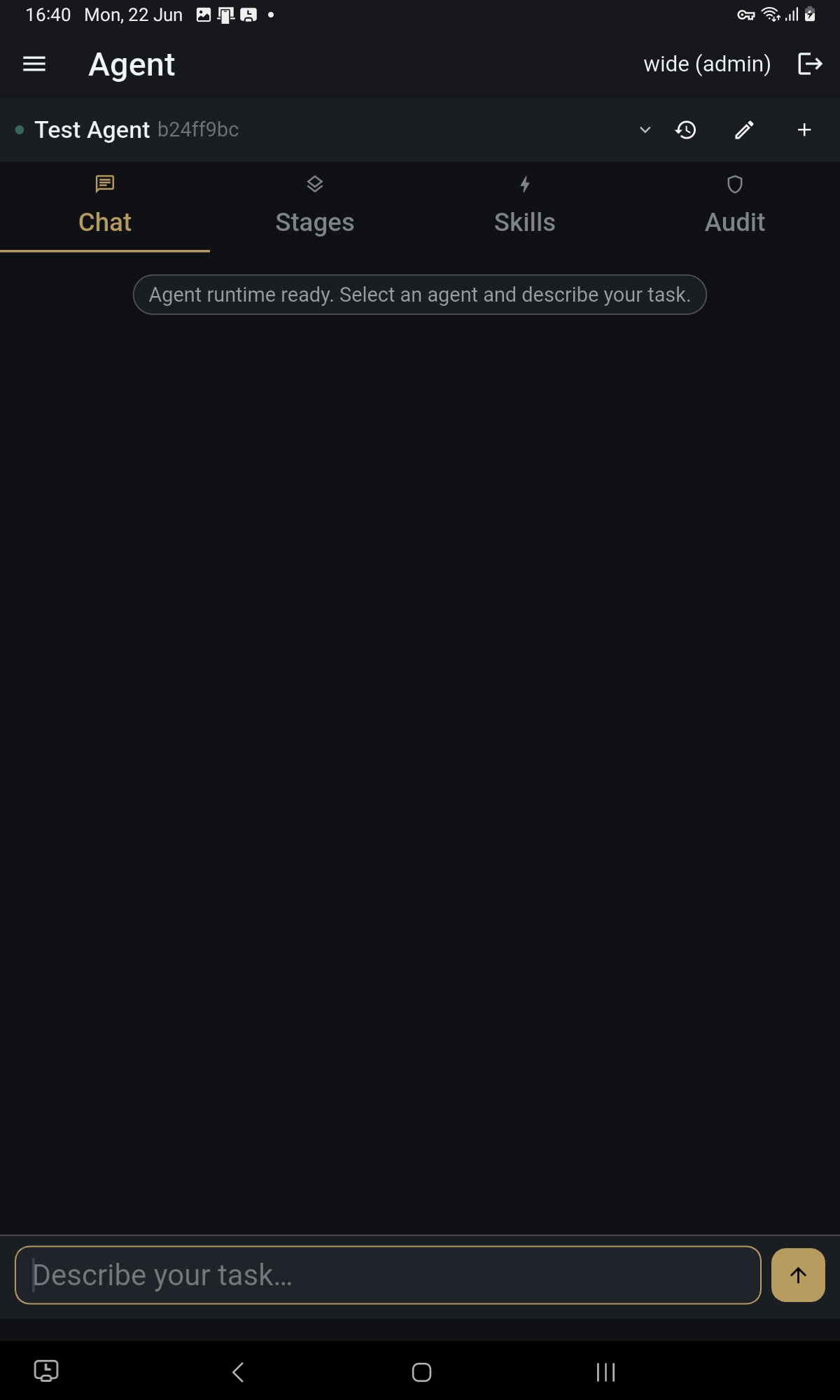
A local LLM can answer questions. Assist provides the professional workspace around it: clients and cases, reviewed document extraction, reusable skills, scoped knowledge, controlled delegation, task templates, approval gates and traceability across a multi-step job. Professionals decide which steps can proceed and which require named review.
Agents / Skills / Human approval gates / Delegated spawning
Authorised knowledge and domain adaptation
Domain knowledge.
Auditable datasets.
Give each workflow versioned knowledge packs, approved datasets, templates and, where appropriate, domain adapters. Documents are extracted for review, candidate chunks can be approved or rejected, and useful outputs enter reusable knowledge only through an explicit decision. Sources and versions remain identifiable, so teams can evolve capability without turning institutional knowledge into an ungoverned prompt library.
Knowledge packs / Approved datasets / Domain adapters / Authorised versions

Who we work with
Built for regulated
professional practices.
Legal
Law firms and notarial offices
Matter intake, research support, document review, chronology and evidence handling, due diligence, drafting support, and knowledge retrieval. Lawyers review and remain the authority.
Read the case study →Financial and accounting
Accountants and fiscal advisors
Document analysis, regulatory checks, and client-report preparation using authorised knowledge and approved datasets, on your infrastructure and under professional review.
Read the case study →Healthcare
Medical practices
Patient-context knowledge bases. Approved protocol agents. Defined actions and approvals are traceable. The deployment is designed to keep sensitive content within your controlled perimeter.
Read the case study →Labor and compliance
Labor consultants and advisors
Contract generation, regulatory cross-reference, compliance verification. Skill-based agents that follow your approval chain exactly.
Read the case study →Audit
CPA and audit practices
Chain of custody from source document to sign-off. Every review, flag and approval signed and traceable, per engagement, isolated from every other client's data.
Read the case study →Aerospace
Engineering and quality teams
Sign-off you can reconstruct and verify. Every stage gated behind explicit human approval, bound cryptographically to the sequence your team actually carried out.
Read the case study →Governance and deployment
The questions
that matter before a pilot.
How is Assist different from a local LLM or document chatbot?
A chatbot answers prompts. Assist structures repeatable work using skills, scoped knowledge, authorised versions, approval gates, and traceable workflow events. It is built for work that must be reviewed, repeated, and reconstructed.
Where are documents and data processed?
Assist runs on premises within infrastructure your organisation controls. Document content, approved datasets, knowledge, and audit records are designed to remain inside that controlled perimeter.
Does Assist make professional decisions autonomously?
No. Your team defines which steps may run and which require named approval. Professional judgement remains authoritative, and unreviewed output remains visibly proposed.
What can cryptographic verification establish?
It can make later alteration detectable and support independent verification of defined events and approvals. It supports governance and reconstruction; it does not itself guarantee accuracy, compliance, or admissibility.
Can Assist use our own methods and knowledge?
Yes. Workflows can use authorised templates, procedures, precedents, knowledge packs, approved datasets, and appropriate domain adapters, with sources and versions kept identifiable.
What happens during a pilot?
We select one bounded, valuable workflow, configure your authorised sources and approval rules, run it with named users for 15 days, and assess operational fit from observed use.
Three founding pilot slots
Scope a real workflow.
Tell us where repetitive handling, review risk, or weak traceability is costing your team. We will assess whether it is a suitable 15-day pilot and respond within one business day.
Application received.
We will be in touch within one business day.